France’s pension funding gap: the 2026 projections
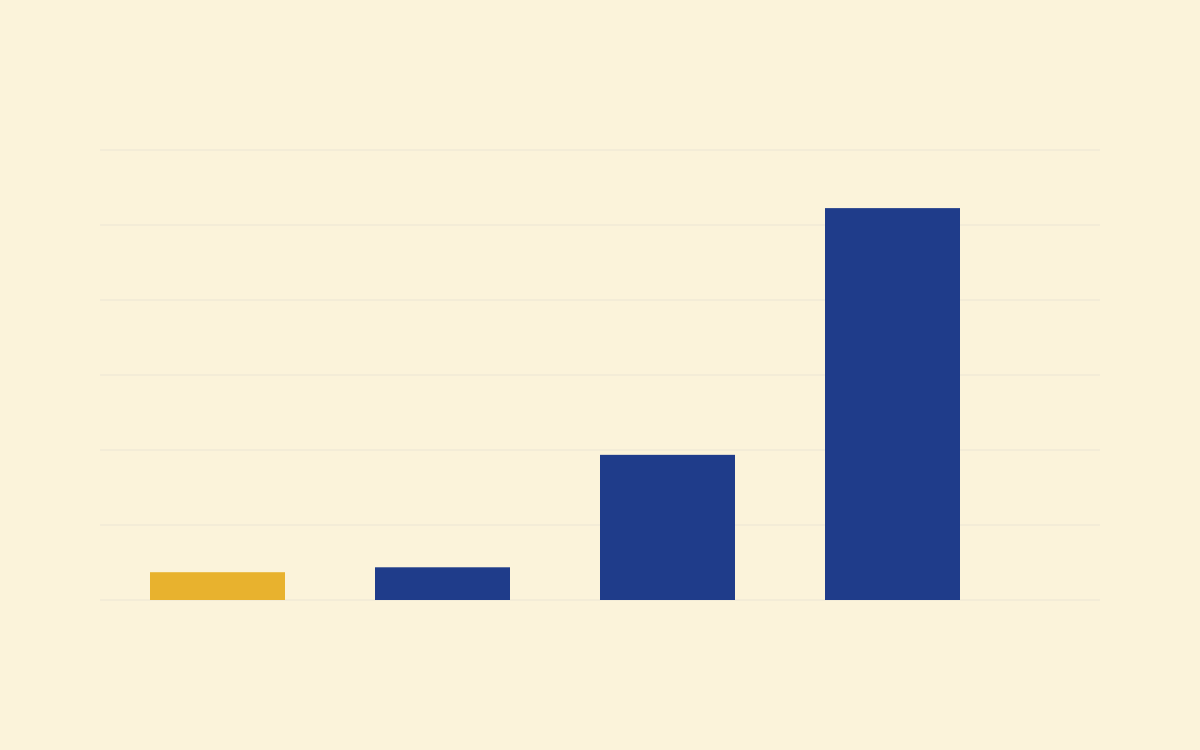
France’s pension system is projected to run an annual funding deficit of 0.2% of GDP in 2030, 0.9% in 2045 and 2.4% in 2070. Those figures come from the Conseil d’orientation des retraites’ June 2026 report, under its reference scenario and the rules included in that report. By 2070, projected resources cover about 84% of projected spending.
This is a funding gap in the pension system: the difference between annual resources and expenditure. It is separate from the gap between a worker’s salary and their pension. The projections show pressure for changes in financing or pension rules, without predicting which changes governments will make. They give households a reason to include private investment assets in retirement planning alongside pension entitlements. That second source of resources brings market risk, so its usefulness depends on the growth retained through losses and withdrawals.
Key takeaways
Include private assets in retirement scenarios. The projected 2070 deficit of 2.4% of GDP exposes uncertainty about future financing and rules; it does not specify an individual pension cut.
Test more than one pension assumption. Alternative productivity scenarios put the 2070 funding gap between 1.7% and 3.1% of GDP.
Test the investment side too. Private assets can complement pensions, but a crash near the start of withdrawals can reduce the capital available to compound.
The projected annual shortfall
A deficit of 2.4% of GDP means that one year’s projected pension spending exceeds the resources counted for that year by an amount equal to 2.4% of national output. It is not 2.4% of pension payments, nor the sum of deficits accumulated since 2025.
Projected resources cover about 84% of spending in 2070, calculated from the unrounded workbook values. The remaining funding need does not imply an equivalent percentage cut to anyone’s pension.
State support is already counted
The €417 billion in resources estimated for 2025 already includes assigned taxes, transfers and state support alongside employment-based contributions. It excludes financial income.
The report keeps the central-government civil-service scheme and certain special schemes balanced through state contributions and subsidies. Those transfers are part of the government’s wider budget, even when the individual pension schemes show no deficit.
As these schemes become smaller relative to the economy, balancing contributions and subsidies fall from 1.9% of GDP in 2025 to 1.1% in 2070. That helps explain the decline in total resources relative to GDP. A balanced pension scheme can therefore still require public financing; a headline pension-system balance does not capture the entire budgetary cost.
The scope is France’s legally mandatory schemes, including basic and supplementary pensions and the Fonds de solidarité vieillesse. The funded RAFP supplementary scheme for public employees is excluded. These figures cannot be treated as a harmonised deficit measure for every European country.
Why the outlook worsens over time
The 2026 report incorporates the Insee demographic projections published in April 2026. Its reference scenario assumes 1.45 children per woman from 2028, annual net migration of 150,000 from 2026, and continued gains in life expectancy. From 2040, it assumes annual hourly-productivity growth of 0.7% and unemployment of 7%.
Lower fertility affects the number of future workers and the size of the economy, with the financing pressure becoming more pronounced after the mid-2040s. The report also incorporates revised assumptions for Agirc-Arrco pension-point revaluation from 2038. These contribute to the later deterioration compared with the previous report.
Changing productivity growth alone produces different 2070 outcomes:
Annual productivity growth
Projected annual deficit in 2070, % of GDP
0.4%
3.1
0.7%, reference scenario
2.4
1.0%
1.7
Source: COR June 2026, part 2, figure 2.22. These are alternative assumptions about the economy, not investment-return scenarios or a probability range. All three still show a funding need.
What this means for retirement resources
A persistent funding gap leaves choices about contributions, taxes, retirement conditions and benefit growth. The COR examines these policy levers; the projection does not assume that pension payments disappear. It also does not identify a personal amount to invest.
Accumulated savings and investments can provide retirement resources alongside mandatory pensions. They can give households another source of income if pension rules or benefit growth change, but carry their own market, inflation and longevity risks. The saving-versus-investing study shows how differently cash and equities preserved purchasing power in a historical example ending in 2026.
Whether a pension covers a household’s spending depends on its entitlements, costs, assets and debts. A national funding deficit cannot answer that question.
Private assets alongside pensions
The planning implication is to give private wealth accumulation a defined place alongside mandatory pension income. Personally owned investments can provide flexibility if retirement timing, taxes or benefit growth change. They remain exposed to economic conditions that can also put pressure on public finances.
A practical retirement review can compare three things:
Resources and spending: set out expected pension income, household costs, debts and private assets separately.
Policy sensitivity: examine changes in benefit growth or retirement timing without converting the national deficit into an assumed personal cut.
A crash around withdrawals: assess what happens if investments fall just before or after spending from the portfolio begins.
Withdrawals during a fall sell more units for the same spending, leaving less capital for a recovery. This sequence risk connects crash awareness to geometric wealth growth: the accumulation rate matters, but so does the capital left after losses and spending. The compounding study explains the arithmetic; its accumulation results do not establish a safe retirement withdrawal rate.
The COR data supports scenario planning around pension uncertainty. It does not determine a suitable portfolio, investment amount or assumed return.
Sources and method
COR annual report, June 2026, synthesis and part 2. The chart uses the annual reference-scenario series in the published synthesis workbook, checked against part 2’s figures 2.13 and 2.14 and the report’s PDF. Productivity sensitivity comes from figure 2.22.
The deficit is expenditure minus resources; the downloaded data preserves the report’s signed balance, resources minus expenditure. The measure excludes financial income and charges, and allocations to and releases from provisions. State balancing contributions follow the report’s accounting convention. The projections reflect legislation and assumptions included in June 2026, including the suspension provisions affecting the 2023 pension reform. They are not a live forecast of subsequent policy decisions.
Published by copio for information and education. The analysis does not recommend an investment, savings rate or retirement date.
FAQ
Does a projected pension deficit mean pensions will stop being paid?
No. It means projected annual spending exceeds the resources counted under the report’s rules. Governments can change financing, benefits or retirement conditions. The deficit does not specify which response will occur or imply an equivalent percentage cut to individual pensions.
Which pension schemes do these figures cover?
The COR projection covers France’s legally mandatory pension schemes, including basic and supplementary schemes and the Fonds de solidarité vieillesse. It excludes the funded RAFP supplementary scheme for public employees. The balance includes existing state balancing contributions and excludes financial income and charges.